The Sigenergy SigenStor is a stackable home battery system where the inverter, battery modules and optional EV charger all click together into one tower. Industry analyst SunWiz ranked Sigenergy the number one residential battery manufacturer in Australia for 2025, based on Clean Energy Regulator data, which is remarkable for a company founded in 2022. We are brand-neutral, so here is the honest version: what it does well, where it falls short, and who should look elsewhere.
The short verdict
The SigenStor is one of the best-designed systems you can buy for a new solar and battery install, especially if you want room to grow into more storage or an EV later. It is less compelling if you only want the cheapest kWh, if you want to mix and match brands, or if you need whole-home backup on a tight budget.
It suits you if
- You are putting in solar and a battery together, or your current inverter is due for replacement anyway.
- You want to start around 8 to 10kWh and add modules later without redesigning the system.
- You have, or plan to buy, an EV and like the idea of DC charging from the same stack.
- You care about monitoring and want a detailed, genuinely useful app.
Skip it if
- Lowest upfront price is your main goal. Value brands like Sungrow and GoodWe usually quote lower for the same size.
- You want a battery that works with any brand of inverter. SigenStor batteries only run with Sigenergy's own energy controller.
- You want a long local track record above all else. The brand is only a few years old.
The SigenStor range in Australia
A SigenStor is built from parts that stack on top of each other: an energy controller (Sigenergy's name for its hybrid inverter), one to six battery modules, and optionally a DC EV charger module. The Sigen Energy Gateway is a separate box near your switchboard that handles blackout backup.
| Spec | SigenStor BAT 5.0 | SigenStor BAT 8.0 |
|---|---|---|
| Usable capacity per module | 5.2 kWh | 7.8 kWh |
| Stacking | 1 to 6 modules per stack, so roughly 5kWh up to about 47kWh usable in one tower | |
| Chemistry | Lithium iron phosphate (LFP) | |
| Continuous charge/discharge (per module) | 2.5 kW | 4 kW |
| Peak (10 seconds, per module) | 3.75 kW | 6 kW |
| Coupling | DC-coupled through the Sigenergy energy controller (single-phase or three-phase). Can be AC-coupled alongside an existing solar inverter. | |
| Blackout backup | Yes, with the Sigen Energy Gateway (extra hardware and labour) | |
| Warranty | 10 years. At least 70% of usable capacity at year 10, or 15.85 MWh (5.0) / 23.77 MWh (8.0) throughput, whichever comes first. Gateway 5 years. | |
| Rating and mounting | IP66, indoor or outdoor, floor standing or wall mounted, operating range -20 to 55°C | |
Two newer modules, the BAT 6.0 (5.84kWh usable) and BAT 10.0 (8.76kWh usable), were announced for Australia in late 2025 and can be mixed with the older sizes. Availability varies by installer, so if a quote lists them, ask which modules you are actually getting and what the combined usable capacity is.
The actual power your home can draw is capped by the energy controller as well as the modules. Single-phase controllers come in several sizes up to 12kW, and three-phase controllers go larger. A bigger stack stores more, but a small controller still limits how fast it can discharge, which matters if you run ducted air con or an EV charger in the evening.
5.2 or 7.8 kWh
Usable per module
1 to 6
Modules per stack
Needs Sigen Gateway
Backup
10 years
Battery warranty
What we like
- Genuinely modular. You can start with two modules and add more later. That matters because the federal discount pays the full rate only up to 14kWh, so starting modest and expanding when your usage justifies it is a sensible strategy.
- Tidy install. Inverter, battery and EV charger stack in one footprint instead of three boxes on the wall.
- Strong app. The mySigen app is detailed down to cell temperatures and voltages, and it is how Sigenergy pushes firmware and recall notices.
- Real backup performance. With the gateway fitted, Sigenergy rates the switch to backup in single-digit milliseconds, and the gateway can also manage a generator.
- Easy to find an installer. As the biggest-selling residential battery brand of 2025, it is widely stocked, so finding someone who has fitted plenty of them is rarely hard in the cities.
What to watch
- Brand lock-in. The battery modules only work with Sigenergy's energy controller. If the controller fails out of warranty, you are replacing it with another Sigenergy one.
- Backup costs extra. The Sigen Energy Gateway is a separate purchase. A quote without it is not a like-for-like comparison with a battery that includes backup.
- The 2025 recall. Some single-phase energy controllers had AC plugs that could overheat (details below). It was handled with replacements and firmware, but it happened.
- Young company. A 10-year warranty is only as good as the business behind it. Sigenergy is large and growing, but it has not been around for 10 years yet.
- Communication. SolarQuotes' review criticised Sigenergy for not being open about problems. Keep that in mind if something goes wrong and you need a straight answer.
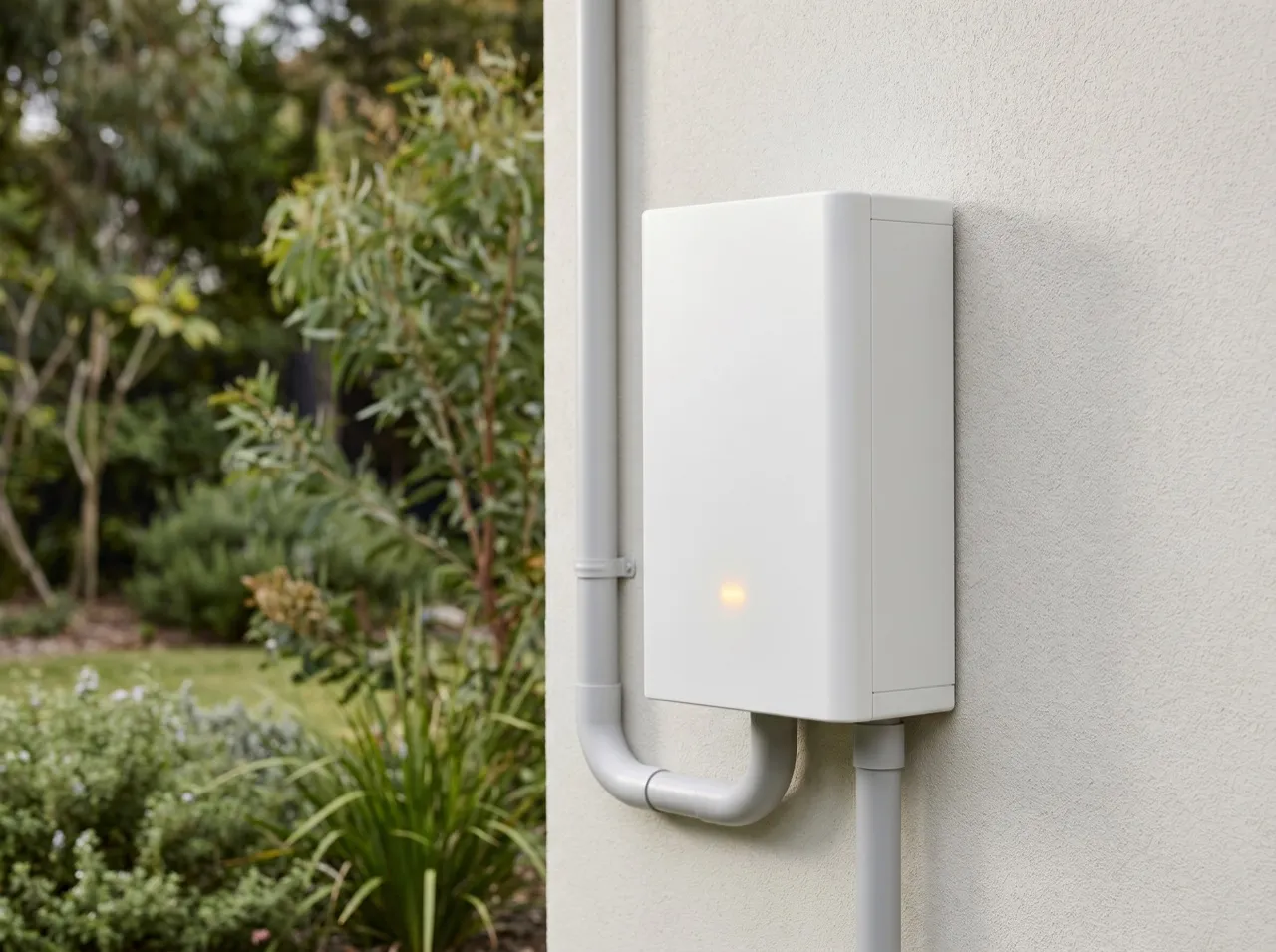
Real-world considerations
Inverter compatibility
SigenStor is a closed ecosystem. On a new install, the Sigenergy energy controller is your solar inverter and battery inverter in one, which is efficient because solar charges the battery on the DC side without converting twice. On an existing system, Sigenergy supports an AC-coupled retrofit: your old inverter keeps running the panels and the SigenStor sits beside it. You still buy the energy controller either way. Our battery and inverter compatibility guide explains when a retrofit makes sense and when it is smarter to replace the old inverter.
Backup and blackouts
Without the gateway, a SigenStor does not provide proper blackout backup. With it, your installer can set up backup for selected circuits or the whole home, subject to your switchboard and the energy controller's size. If backup is a priority (rural properties, frequent outages, medical equipment), make sure the gateway is itemised in your quote.
App and monitoring
The mySigen app is one of the better ones on the market. It shows solar, battery, grid and EV flows, lets you tune how the battery charges and discharges, and notifies you of firmware updates. Keep the system online: during the recall, Sigenergy used internet-connected systems to monitor and limit output on affected units remotely.
VPP compatibility
Amber's SmartShift supports Sigenergy systems fitted with a Sigen Sensor or Gateway, and AGL invites Sigenergy batteries into its bring-your-own-battery VPP. Independent trackers list other retailers too, but their lists disagree with each other and change often, so check with the VPP before you buy if the payments matter to you. If you are in NSW, joining an approved VPP is also what unlocks the separate state incentive. Our VPP comparison walks through the trade-offs.
The 2025 energy controller recall
In November 2025, Sigenergy issued a voluntary recall on some single-phase 8, 10 and 12kW SigenStor energy controllers with quick-connect AC plugs. The Clean Energy Regulator notice says the plugs could overheat, posing a fire risk, with around 100 units affected. Affected owners get a free replacement controller with an updated plug, plus a firmware update, and SolarQuotes reported an extra two years of warranty for affected units. Sigenergy pointed to installation practices as a factor. The battery modules were not recalled. If you already own a single-phase SigenStor, the mySigen app will tell you if yours is affected.
What it costs after the federal discount
After the federal Cheaper Home Batteries discount, a typical Sigenergy SigenStor system lands around $8,000 to $13,500 fully installed. That puts it at the premium end of the market. For comparison, our battery cost guide puts a generic 10kWh battery at $7,000 to $10,000 after the discount, and Sigenergy tends to sit in the upper part of that.
| Setup | Roughly | Indicative installed (after federal discount) |
|---|---|---|
| Two small modules, or a 5.0 + 8.0 mix | About 10 to 13 kWh | From about $8,000 |
| Single tower, two BAT 8.0 or similar | About 16 kWh | About $10,500 to $13,500 |
| Add the Sigen Gateway for backup | - | Adds to the above, ask for it itemised |
The federal discount is worth roughly $240 to $270 per usable kWh at current certificate prices, at the full rate up to 14kWh and a reduced rate above that. Your state may offer a separate incentive with its own rules, such as a VPP connection payment in NSW or an low-interest loan in the ACT. We always quote those as two separate numbers, never one merged figure. See battery rebates by state, or get your own estimate from the savings calculator.
Not sure how many modules you need? Our battery sizing guide helps you avoid paying for capacity you will not use.
How it compares
| Battery | Best at | Watch out for | Indicative after federal discount |
|---|---|---|---|
| Sigenergy SigenStor | Modular all-in-one design, EV integration, app | Lock-in, gateway for backup, 2025 recall | $8,000 to $13,500 |
| Sungrow | Value, long Australian track record | Less integrated EV story | $6,000 to $9,000 |
| Tesla Powerwall 3 | Simple single unit, built-in solar inverter, strong VPP support | Fixed 13.5kWh steps, not modular | $10,000 to $13,000 |
| FoxESS | Lower cost per kWh, big stacks | App polish, support runs through installers | $7,500 to $11,000 |
Price ranges are each brand's typical installed size, from our brand pages, so they are a guide to budget rather than a straight per-kWh comparison.
Against Sungrow: Sungrow is usually cheaper and has been in Australia far longer. The SigenStor wins on integration and the all-in-one stack. If you do not care about EV charging or the app, Sungrow is the value pick. Read our Sungrow review.
Against Tesla Powerwall 3: the Powerwall is simpler and has wider VPP support, but you buy it in 13.5kWh units. Sigenergy lets you land closer to the size you actually need and add later.
Against FoxESS: FoxESS is the price fighter with bigger stacking options. Going by owner feedback, Sigenergy's app is the more polished of the two. See our FoxESS review and our GoodWe Lynx review for two more modular options, and the Alpha ESS SMILE and BYD Battery-Box reviews if you want batteries that suit a wider range of inverters.
Our take
The SigenStor earns its popularity. It is well engineered, easy to expand and pleasant to live with. The price premium buys you integration, not extra storage, so it makes the most sense for new builds, full system replacements and EV households. If you just want the most kWh for the dollar on top of existing solar, you will likely do better elsewhere. Either way, compare after-rebate quotes like for like, including the gateway if you want backup, and check the warranty is registered in your name.