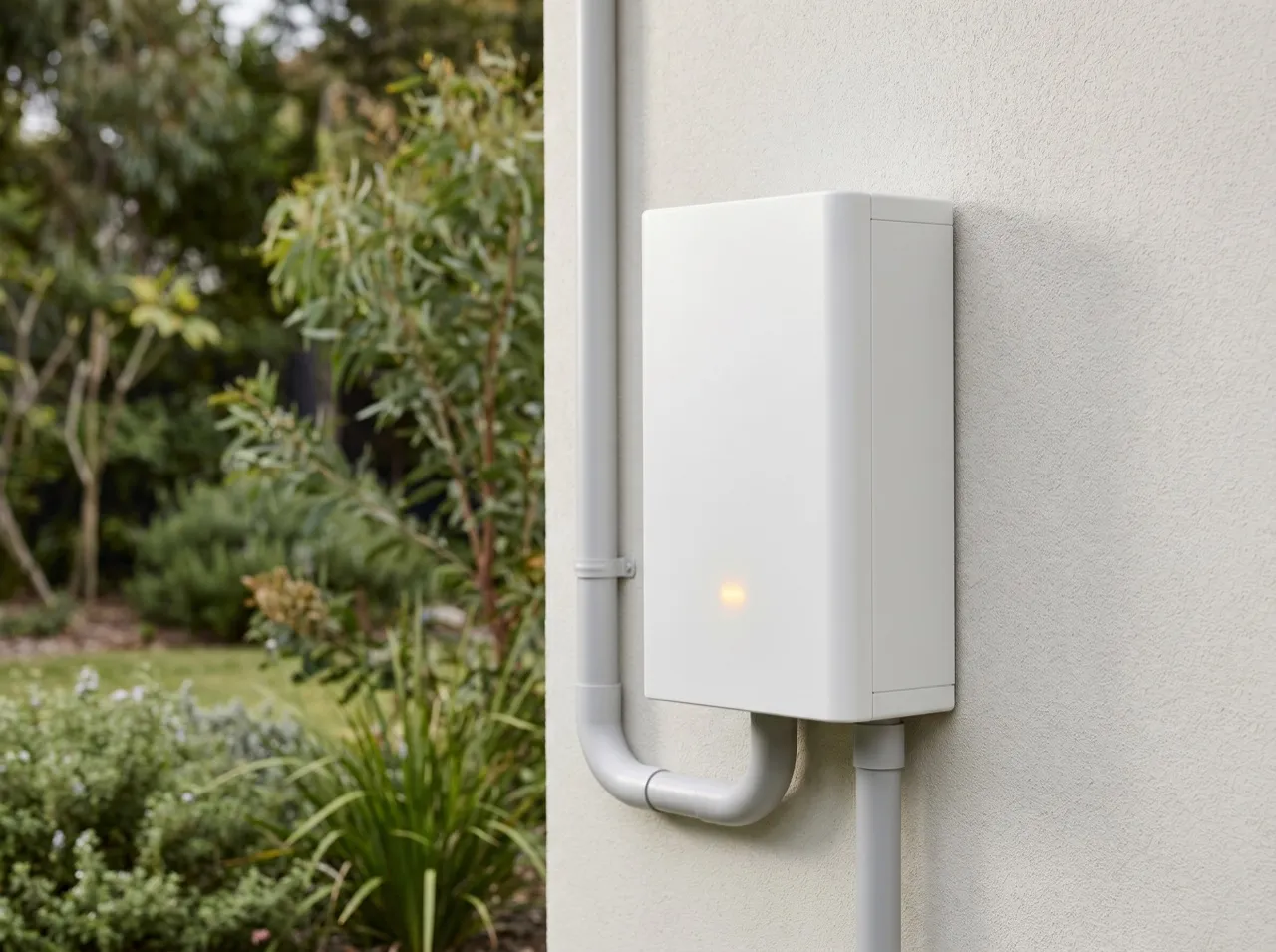
Sungrow is the battery a lot of Australian installers reach for by default. It's good value,
the parts are easy to get, and the SBR has been in Aussie homes for years now. It isn't
perfect though. It only works with Sungrow's own inverters, small stacks are power-limited,
and the 2026 warranty added some heat conditions you should know about before you buy.
The verdict
Buy it if you're putting in solar and a battery together (or already have a Sungrow
hybrid inverter), you want a well-supported brand at a fair price, and you like the idea of
starting at 9.6kWh and adding modules later.
Skip it if you want to keep a working non-Sungrow inverter without adding a second one,
your only possible battery spot is a hot, west-facing wall, or you want a tiny battery that
can still push out lots of power. A small SBR stack can't.
What Sungrow sells in Australia right now
Sungrow's home battery line-up is two ranges, both lithium iron phosphate (LFP), both
high-voltage, and both built to plug into a Sungrow hybrid inverter:
- SBR: the one most homes get. 3.2kWh modules stacked two to eight high, so 6.4kWh to 25.6kWh usable per stack. The popular sizes are the SBR096 (9.6kWh), SBR128 (12.8kWh) and SBR160 (16kWh).
- SBH: the newer, bigger sibling. 5kWh modules, 10kWh to 40kWh per stack, and up to four stacks in parallel. It pushes 50A instead of 30A, so it delivers more power from the battery. It mostly suits larger or three-phase homes.
| Spec | Sungrow SBR | Sungrow SBH |
|---|
| Module size | 3.2 kWh | 5.0 kWh |
| Usable per stack | 6.4 to 25.6 kWh (2 to 8 modules) | 10 to 40 kWh (2 to 8 modules) |
| Chemistry | LFP (prismatic cells) | LFP (prismatic cells) |
| Continuous current | 30 A | 50 A |
| Coupling | DC, Sungrow SH hybrids only | DC, Sungrow SH hybrids only |
| Backup | Via the hybrid inverter's backup port | Via the hybrid inverter's backup port |
| Rating and mounting | IP55, indoor or outdoor, floor-standing | IP55, indoor or outdoor, floor-standing |
| Cooling | Passive (natural convection) | Passive (natural convection) |
| Warranty | 10 years, 70% capacity retained | 10 years, 70% capacity retained |
Two practical notes from the datasheets. Both ranges are floor-standing, not
wall-hung, so you need a patch of level floor or slab. A 9.6kWh SBR weighs about 114kg and a
16kWh stack about 180kg. And both are passively cooled, which matters more than it sounds.
More on that in the warranty section.
Power: the catch with small SBR stacks
This is the thing most quotes don't mention. The SBR is limited to 30A, and because it's a
high-voltage battery, the power it can deliver depends on how many modules are in the stack.
Sungrow's own compatibility chart puts the maximum battery output at about:
- 9.6kWh (SBR096): 5.76kW
- 12.8kWh (SBR128): 7.68kW
- 16kWh (SBR160): 9.6kW
So a 9.6kWh SBR on a 10kW inverter can't run the inverter flat out from the battery alone at
night or in a blackout. For most homes 5.76kW is plenty for evening loads, but if you run
ducted air-con, an induction cooktop and an oven at the same time, go at least one size up or
look at the SBH. On single-phase SH-RS inverters there's also a ceiling: the 25.6kWh SBR256
is outside the inverter's voltage range, and the 22.4kWh SBR224 needs special firmware from
Sungrow. Bigger single-phase setups use parallel stacks or the SBH.
The warranty, and the fine print that changed in 2026
Sungrow's Australian battery warranty is 10 years against defects, plus a performance
guarantee of at least 70% of original capacity after 10 years. For normal home use,
meaning storing solar or off-peak power for your own use, and backup, there's no cycle limit.
That's genuinely good.
But read the rest of it, because the current version (V9.0, for installs from 21 May 2026) adds conditions:
- Heat. The performance warranty only applies if the battery's operating temperature profile each year stays within Sungrow's limits: fewer than 90 days between 35°C and 40°C, fewer than 30 days above 40°C, and an average under 25°C for the rest of the year. A passively cooled battery on a sun-baked western wall in Perth or western Sydney could plausibly fall outside that.
- Other uses have a throughput cap. Anything beyond self-consumption and backup falls under a lifetime energy limit, for example 35.84MWh for a 12.8kWh SBR128, which works out to about 2,800 full cycles. VPP participation isn't one of the two listed uses, so ask your installer and your VPP how this applies to you.
- It must be online. The warranty excludes systems not monitored in Sungrow's iSolarCloud. If the data history is incomplete, Sungrow only commits to honouring the warranty for at least four years.
- It isn't transferable beyond the original purchaser and the end user they supplied, which is worth knowing if you might sell the house.
None of this is unusual on its own, and Australian Consumer Law protections apply regardless.
The practical fix is simple: put the battery in a garage, on a shaded south or east wall, or
under cover, and keep the Wi-Fi connected. For more on what drives battery life, see
how long solar batteries last.
Pros and cons
What we like
- Value. Consistently one of the cheapest reputable brands per usable kWh once installed.
- Genuinely modular. Start at 9.6kWh and add 3.2kWh modules later (new modules only, added to the existing stack).
- One brand, one app. Inverter and battery from the same company, monitored together in iSolarCloud, with a single warranty contact.
- Proper backup on the bigger hybrids. The SH8.0RS and SH10RS have a built-in 63A bypass that can back up the whole house with a sub-10ms switchover, without a separate gateway box.
- Installers know it. Easy to find someone who has fitted dozens of them, which counts for a lot when something needs sorting in year six.
- No cycle limit for normal self-consumption and backup use.
What we don't
- Locked to Sungrow inverters. The SBR and SBH won't talk to other brands' hybrids.
- Small stacks are power-limited (5.76kW from a 9.6kWh SBR).
- Passive cooling plus a heat-based warranty condition means placement really matters.
- Floor-standing and heavy, so it needs floor space rather than a spare bit of wall.
- 70% retention is standard, not class-leading, and the app is functional rather than slick.
Real-world considerations
Inverter compatibility
The SBR and SBH are DC-coupled and only pair with Sungrow's SH hybrid inverters: the
single-phase SH-RS range, the three-phase SH-RT, and the larger three-phase SH-T models. Sungrow's
plain SG string inverters can't take a battery at all. If your current solar runs on a Fronius,
SMA or another brand, you'll need a Sungrow hybrid in the system, either replacing the old
inverter or sitting alongside it. That's the biggest single thing to check, and our
battery and inverter compatibility guide walks through it.
Backup and blackouts
Backup is an inverter feature. On the SH8.0RS and SH10RS the backup port is rated to 63A, which is
enough for whole-home backup in most houses, but your installer decides at install time which
circuits are on it. Remember the battery power limit above: in a blackout at night, a small SBR
stack sets the ceiling.
App and monitoring
iSolarCloud shows solar, battery, grid and house usage in one place and lets you set
charge windows. It's not as polished as Tesla's app, but it does the job, and staying connected
to it is a warranty condition.
VPPs
Sungrow systems with a single SH hybrid are accepted by several Australian Virtual Power Plant
programs, including AGL's and Amber's at the time of writing. Amber notes that sites with two or
more Sungrow hybrids aren't supported for battery automation. In WA, Sungrow's hybrids appear on
Synergy's Supported Solutions List for the state battery scheme, but check the current VPP
status for your exact model. Program lists change constantly, so compare them with our
VPP guide before you commit.
Known issues and recalls
We found no Australian recall notices for the SBR or SBH while researching this review. The
most common criticisms are about the warranty wording (heat and connectivity conditions) rather
than failures. As always, the installer matters as much as the badge.
What a Sungrow battery costs after the federal discount
These are indicative, fully installed prices with a Sungrow hybrid inverter included, after the
federal Cheaper Home Batteries discount. Your state
incentive, if you get one, is a separate number and isn't included here.
| Size | Suits | Indicative installed (after federal discount) |
|---|
| SBR096 (9.6 kWh) | Typical home, moderate evening use | From around $6,000 |
| SBR128 (12.8 kWh) | Families with solid evening use | Around $6,500 to $7,500 |
| SBR160 (16 kWh) | Bigger homes, more backup, EV plans | Around $7,500 to $9,000 |
| SBR192 and up, or SBH | Large or three-phase homes | Quoted per job |
Two things push the price around. First, whether you need the Sungrow hybrid inverter at all: if
you already have one, you're mostly paying for the battery. Second, size above 14kWh: the federal
discount pays the full rate on the first 14kWh, 60% of it from 14 to 28kWh, and 15% from 28 to
50kWh, so big stacks get less help per kWh. For general pricing by size, see
how much a solar battery costs, and if you're not sure
what size you need, start with what size battery do I need.
Rebates: federal and state, kept separate
Eligible Sungrow batteries qualify for the federal discount, which your installer applies at the
point of sale. Depending on where you live, a state incentive may also apply, such as VPP
connection payments in NSW or a state battery rebate in WA. We always quote these as two separate
numbers because they come from different schemes with different rules. See what's available where
you live on our solar battery rebate pages.
How Sungrow compares
- vs BYD Battery-Box: similar LFP modular approach and similar money. BYD's big advantage is that it works with lots of third-party inverters (Fronius, GoodWe, SMA and more), so it's often the easier retrofit. Sungrow wins on single-brand simplicity. Read our BYD Battery-Box review.
- vs GoodWe: the closest like-for-like, a hybrid inverter maker with its own stackable Lynx batteries at a similar price. Pick on installer experience and the specific quote. See our GoodWe Lynx review.
- vs Tesla Powerwall 3: fixed 13.5kWh with a built-in solar inverter and a slicker app, but it typically costs more installed. Sungrow gives you more capacity per dollar and the option to grow.
- vs Sigenergy: a more premium all-in-one design with optional EV charging, at a higher price. Our SigenStor review covers it.
You'll find more detail on the brand, including popular models, on our
Sungrow battery page. Other reviews worth a look:
AlphaESS SMILE and
FoxESS.
The bottom line
The Sungrow SBR is a sensible, good-value battery that's hard to go badly wrong with, provided three
things line up: you're happy to run a Sungrow hybrid inverter, the stack is big enough for the power
you actually draw, and it's installed somewhere that doesn't cook in summer. If those boxes are
ticked, it's one of the strongest value picks in Australia. Run your numbers through the
savings calculator to see what it could save you.