Federal battery rebate is live: around 30% off your invoice. Already cut twice in 2026, next cut 1 January 2027. ≈30% federal rebate live, next cut 1 Jan 2027 See the step-down schedule

Put three batteries side by side

Usable capacity, what you actually have to buy, what survives a blackout, and how much capacity the warranty still guarantees in ten years. Every figure shows where it came from and when we checked it.

Accredited installers Part of the Why Solar group, est. 2019 35+ years combined experience No spam, ever

Choose up to three to compare

2 rows hidden where these agree
Sigenergy SigenStor$8,000 to $13,500installed, after the federal discount (estimate)
Sungrow SBR$6,000 to $9,000installed, after the federal discount (estimate)
Tesla Powerwall 3$10,000 to $13,000installed, after the federal discount (estimate)

Storage and power

Usable capacity
5.2 to 46.8kWh, in 5.2kWh stepsModules are 5.2 or 7.8kWh usable, 1 to 6 per stack. Later BAT 6.0 / BAT 10.0 modules are 5.84 / 8.76kWh.
6.4 to 25.6kWh, in 3.2kWh steps2 to 8 modules of 3.2kWh per stack.
13.5kWhTotal battery energy is 14kWh; 13.5kWh is the usable figure Tesla publishes.
Continuous output
2.5kWPer 5kWh module (4kW on the 8kWh module); a stack adds up. Peak is 3.75kW for 10 seconds.
9.6kWPer-stack maximum battery power rises with stack size (SBR096 5.76kW, SBR128 7.68kW, SBR160 9.60kW). The figure shown is for a 16kWh stack.
11.04kWOutput only. Charging is capped at 5kW (21.7A), so a big solar array cannot refill it as fast as it empties.
Cell chemistry
LiFePO4 (LFP)
LFP, 3.2kWh modules
Not establishedTesla does not state the cell chemistry in the Australian datasheet.
Can it grow?
1 to 6 modules per stack, and an EV charger can be added to the same tower later.
Add modules up to 8 per stack. Larger homes move to the SBH line instead.
Up to 4 Powerwall 3 units, plus up to 3 Expansion units (7 units maximum).

What you have to buy

Inverter included
YesThe energy controller is the inverter, and an EV charger can be stacked on.
NoBattery only. A Sungrow hybrid inverter is required.
YesSupports up to 20kW DC of solar across 3 MPPTs.
Coupling
DC or AC-coupledDC-coupled normally; AC-coupled retrofit is documented.
DC-coupled
DC-coupled
Inverter required
Sigenergy energy controller, included in the stack.
Sungrow hybrid only (SH-RS / SH-RT / SH-T). SBR256 exceeds the SH-RS voltage range and SBR224 needs special firmware.
None needed: the solar inverter is built in.
Supply type
Single phase and Three phaseSingle-phase and three-phase energy controllers are both sold.
Single phase and Three phaseSH-RS is single phase, SH-RT/SH-T three phase.
Single phaseSingle phase, 230VAC. Three-phase homes need one per phase or a different system.
Adding to existing solar
Can be AC-coupled beside an existing solar inverter, but you still buy the Sigenergy controller, so a retrofit is not much cheaper than a fresh install.
Workable but it means replacing your existing solar inverter with a Sungrow hybrid, which is a real cost on top of the battery.
Poor fit for a retrofit: you already own a working solar inverter, and the Powerwall’s built-in one is much of what you pay for.

Blackout backup

Extra equipment needed
Needs the Sigen Gateway for backup. Not included in a base quote.
No separate gateway: backup is built into the hybrid inverter.
Needs a Backup Gateway 2, the listed islanding device. It is a separate unit, not part of the Powerwall.

Warranty

Capacity guaranteed at end
70%
70%
Not establishedThe datasheet states 10 years but no retention percentage. Retailers quote 70%; we have not read the Australian warranty document itself, so we will not state it as fact.
Throughput conditions
70% at 10 years, or 15.85MWh (5kWh module) / 23.77MWh (8kWh module), whichever comes first.
Unlimited cycles for self-consumption and backup. Any other use (a VPP, for example) falls under a throughput table, e.g. 35.84MWh for the SBR128.Warranty V9.0 added an annual temperature-profile condition and requires the system stays monitored in iSolarCloud. Not transferable beyond the original end user.
Not establishedNot stated in the datasheet.

Everything else

VPP compatibility
Amber SmartShift supports Sigenergy fitted with a Sigen Sensor or Gateway, and AGL accepts it in its bring-your-own-battery VPP. Other retailers vary.Estimate
AGL lists Sungrow SBR with a Sungrow hybrid; Amber supports a single SH inverter. Confirm before signing.Estimate
Widely supported, including Tesla’s own Tesla Electric. Confirm the current list with the retailer before signing.Estimate
Australian recall history
November 2025: single-phase 8, 10 and 12kW energy controllers recalled over an AC plug overheating risk. Around 100 units affected, free replacement. The battery modules were not involved.
None foundNo Australian recall found for SBR/SBH at the dates checked.
None foundNo Australian recall found for Powerwall 3 at the dates checked.
Enclosure rating
IP66, floor or wall mount, −20°C to 55°C
IP55, indoor or outdoor, floor stand, natural convection
IP55 enclosure (IP67 battery and power electronics). Indoor and outdoor rated, −20°C to 50°C.

Indicative installed price

After the federal discount
$8,000 to $13,500Estimate
$6,000 to $9,000Estimate
$10,000 to $13,000Estimate

Who each one suits

SigenStor
  • You want to start modest and add capacity as your usage grows.
  • An EV is in your plans within a few years.
  • You have a three-phase home.

Watch: You are locked into Sigenergy hardware end to end.

Read the full review
Sungrow SBR
  • Price per kWh matters more to you than brand or app polish.
  • You are replacing an ageing inverter anyway, or buying solar and battery together.
  • You want backup without buying extra equipment.

Watch: Sungrow hybrid inverters only, so a retrofit means replacing a working inverter.

Read the full review
Powerwall 3
  • You are buying solar and a battery together rather than adding to an existing system.
  • You want whole-home backup and have the budget for the gateway.
  • Your home is single phase.

Watch: Charges at only 5kW, so on a big array it fills slowly relative to how fast it can discharge.

Comparing SigenStor, Sungrow SBR, Powerwall 3. We can price these for your home and tell you which fits your existing setup.

Your comparison goes with the enquiry. One installer, no bidding war.

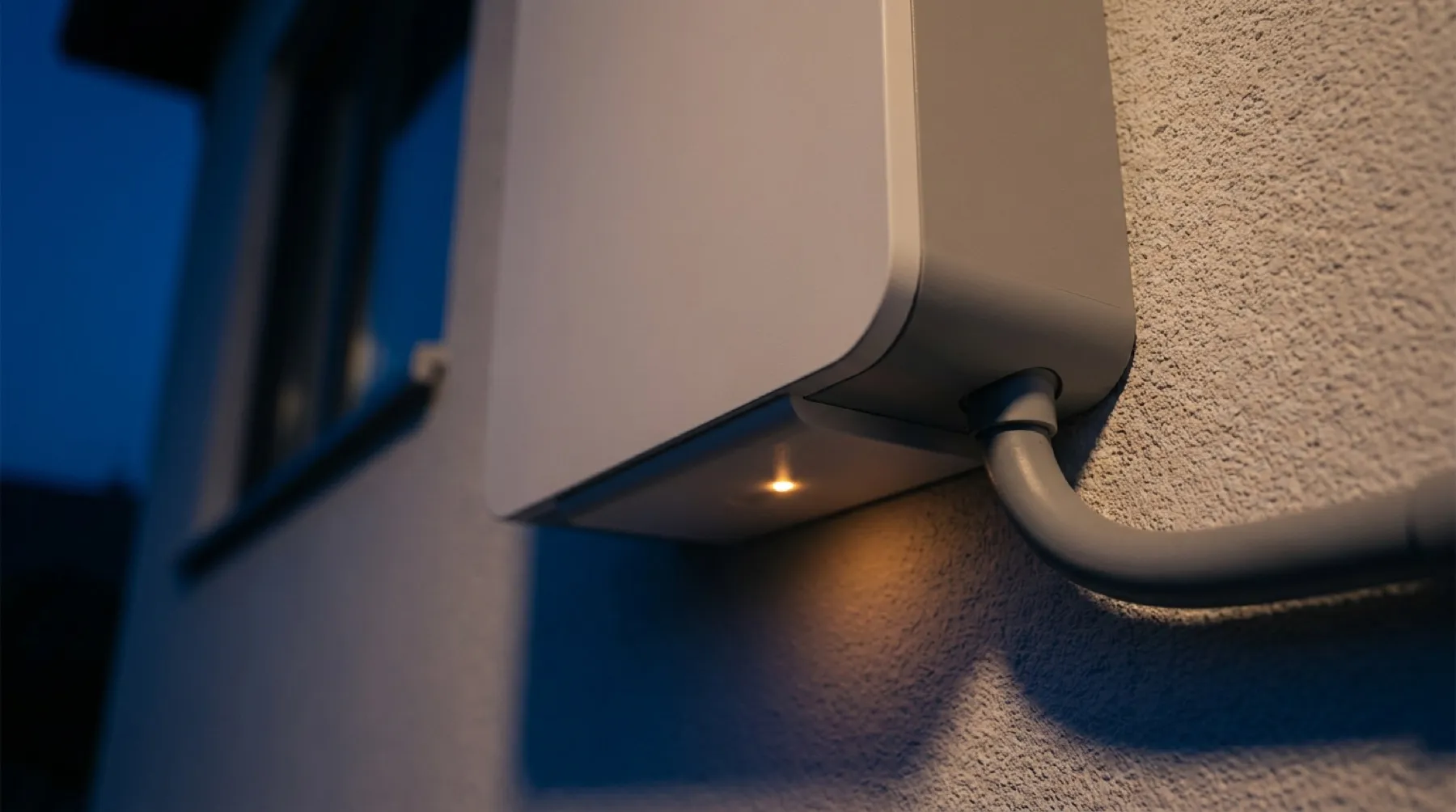
Close detail of a wall-mounted home battery at dusk, its status light glowing amber
Most of the difference is invisible from the outside. Two of these on two walls can be thousands apart on price and still look identical: what separates them is usable capacity, what the inverter arrangement costs, whether anything stays on in a blackout, and how much capacity the warranty still guarantees in ten years. Illustrative image, generated. Not a photograph of a specific product.

How to read a battery comparison

Most battery comparisons are spec sheets. The specs matter, but they are not usually what separates two quotes sitting on your kitchen table. These four rows are:

  • Usable capacity, not nominal. Manufacturers quote both, and the gap can be a kilowatt-hour or more. Usable is what you get, and it is also what the federal discount is calculated on, so it counts twice.
  • What you have to buy alongside it. A battery with no inverter needs one. A battery with an inverter built in is wasted money if you already own a good one. This is the biggest single swing in the final price, and it is why the same battery can be right for your neighbour and wrong for you.
  • What backup actually includes. Most systems need extra hardware before anything stays on in a blackout, and "backup ready" in a quote often means the wiring is there and the equipment is not. Whole-home and selected-circuit backup are different products at different prices.
  • Warranty retention. Ten years is nearly universal, so it tells you little. The percentage of capacity still guaranteed at the end of those ten years is not universal: it ranges from 60% to 70% among the systems here. On a 16kWh battery that difference is about 1.6kWh of allowed fade.

What this comparison does not tell you

It cannot see your roof, your switchboard, your meter or your usage pattern, and those decide a real price. It also has no installation-quality dimension, because we have no defensible way to measure that and inventing one would be worse than leaving it out. Use this to narrow a field to two or three, then have someone look at your actual home.

Common questions

Why are your prices different from other comparison tables?

Because ours are installed prices and most are not. The best-known Australian battery comparison lists hardware at retail excluding installation, which it puts at roughly $3,000 extra. We show an indicative installed figure after the federal discount, and each one states exactly what it covers. They are our estimates from public sources, not quotes and not job data.

What does "estimate" mean on a figure?

Every fact here carries one of three labels. Confirmed means we read it in a manufacturer datasheet, warranty document or regulator notice and linked it. Estimate means it is our figure derived from several public sources, which is always the case for installed prices. Not established means we could not verify it, and we would rather show the gap than fill it.

Does a cheaper battery here mean a cheaper system?

Not necessarily, which is why the comparison shows what you have to buy alongside the battery. A system with no inverter included, or one where backup needs a separate gateway or switch box, can finish dearer than a higher headline price that includes both. The "What you have to buy" and "Blackout backup" sections exist to stop a cheap headline hiding a different system.

Can I compare a battery against a quote I already have?

Yes. Pick the system you have been quoted, check the configuration your quote describes against the rows here, and pay particular attention to usable capacity, what the backup arrangement includes, and the warranty retention percentage. Those three are where comparable-looking quotes most often differ.

Keep going

Free, and no obligation

Narrowed it down?
Get it priced.

Tell us your postcode and we will work out the after-rebate price for the systems you shortlisted, then match you with one vetted installer.

It takes about two minutes, it costs nothing, and you are matched with one installer, never five.
Beat the 4-9pm peak Free rebate check, one installer